
Child forensic interviews give kids a voice during an abuse investigation

A series of rapid events unfold when anyone reports suspected child abuse. First, either law enforcement or the Indiana Department of Child Services (DCS), will:

  1. Investigate the information and try to discern whether or not a child might have been the victim of—or witness to—a crime.
  2. Quickly make contact with the child to visibly confirm they are safe.
  3. Ask the child a few initial questions about what they saw, heard, or experienced.

Once law enforcement or DCS caseworkers in our service area find evidence that a child has likely been abused, sexually assaulted, witnessed a crime, or otherwise suffered maltreatment, they bring them and their non-offending caregivers to Susie’s Place.

Forensic interviews are free and designed to be child-first and non-leading

Forensic interviewing is a skill acquired through intense training and research. The ability to help a child feel safe and talk about what they saw and experienced is challenging, but critical to their recovery.

  • Forensic interviews are provided at no-cost to families.
  • The techniques used to conduct forensic interviews are honed from years of research and best practices worldwide.
  • Forensic interviewers at Susie’s Place are highly trained and experienced in these special conversations.
  • Interviews are designed to reduce the recurrence of trauma and the number of times a child has to retell their experience (e.g., once to the police, later to DCS, then more investigators, then prosecutors, then in court, etc.)
  • Throughout the whole forensic interview, the interviewer is calm, objective, and only asks clarifying questions without praising a child for giving answers that imply innocence or guilt on others.

A young teen girl sits in a comfortable room listening to someone off camera.
The inside of a forensic interview room is calm, simple, and designed to aid investigations.

Here’s what happens during the forensic interview

Every forensic interview at Susie’s Place involves only one interviewer in a room with a child.

The child never sees the multidisciplinary team (MDT) of detectives, officers, investigators, caseworkers, and prosecutors.

The MDT is watching the interview from a separate closed-circuit camera discreetly placed in the interview room.

The team can talk one-way with an interviewer through an earpiece.

Investigators and prosecutors in a separate room can talk to the interviewer through an earpiece. Investigators might say, “Ask them about the clothes they were wearing.” The interviewer then might ask the child, “You said someone was wearing a hat. Tell me everything you remember about the hat.”


Two plush chairs sit inside a room with paper on an easel in the background.
A young girl on a couch speaks to a woman interviewer.
Interviewers ask age-appropriate, non-leading questions designed to help kids talk about their experience.

The forensic interview process works in five broad steps:

  1. The interviewer builds rapport with children in a safe, neutral way. Interviewers will never call a child “buddy” or “pal”, but instead work to build trust by speaking to them at their developmental level. This way, a child not only feels safe but knows they are safe.
  2. The interviewer asks questions to help understand what the child understands, like the difference between truth and something untruthful. This is important because every forensic interview is recorded, and many are played later in court.
  3. The child is asked to identify people in their family, the relationships between them and the alleged perpetrator, where they were, and conversations about body safety and how to keep their bodies safe. These questions are non-leading and designed to be age-appropriate.
  4. The child is given the opportunity to affirm or deny an allegation. This process can take a few minutes or many hours, but the interviewer is listening for a child to discuss what may or may not have happened and is asking non-leading questions to gather details.
  5. At the end, the child can ask questions and is reminded they have safe adults to talk to. The interviewer then gives the report, the recording of the interview, and any notes a child may have drawn or written to the investigators, caseworkers, and prosecutors.

Forensic interviewers are trained to ask non-leading questions like, “Tell me everything that happened after school yesterday” and not “Were you at school when he touched you?”
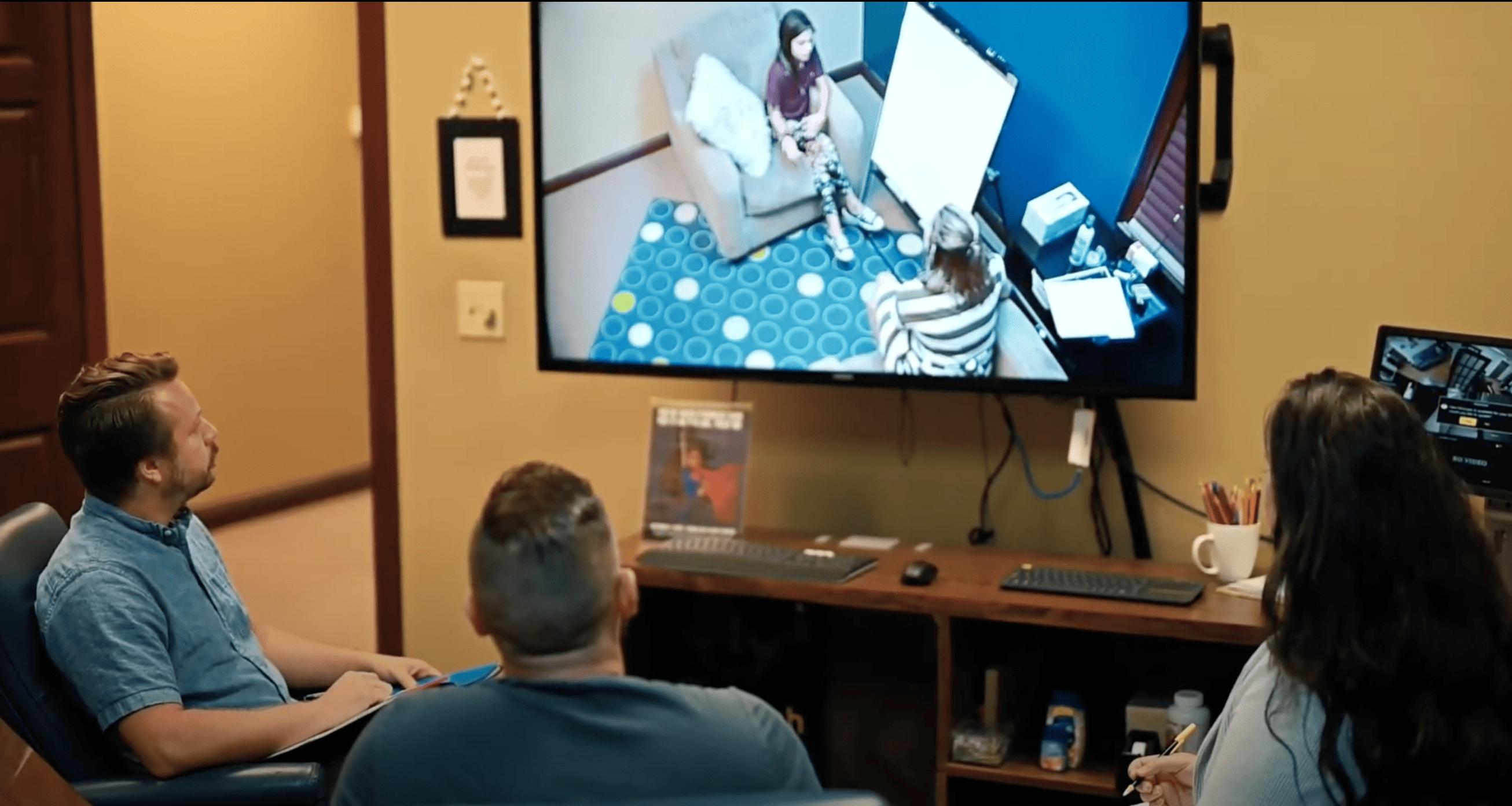
A dramatization of three team members observing a forensic interview from a closed-circuit television. This image is a dramatization.
Multidisciplinary team members observe a forensic interview in this dramatization. Team members communicate with the forensic interviewer through discreet earpieces and are never visible to the child. The child depicted in this image is for demonstration purposes and does not reflect a real case.

A high-quality interview can help prosecution

High-quality forensic interview techniques are designed to serve as evidence that holds up in court. While not every forensic interview is admitted to court as evidence, we work to ensure those that are played for a jury or judge hold up to cross-examination and support justice.

For instance, if a child is the only witness to a crime, their testimony and initial interview at Susie’s Place are critical pieces of evidence. Susie’s Place interviewers are highly trained to balance the needs of the child with the needs of the investigation.

The interview is the first step to healing

Susie’s Place provides help to children and non-offending caregivers or parents during and after the interview. Child and Family Advocates are on-site to answer questions and connect people with mental health referrals, specialized medical health exams, understand the judicial process, and more.

Frequently asked questions about forensic interviews

Should I talk to my child about what happened?

No. If your child brings up the subject and wants to talk about it, listen without questioning. Be sure to reassure your child that they will be alright, and you are taking care of them. If your child does tell you additional information, please contact your law enforcement detective or the Department of Child Services case manager.

How do I explain to my child what is going to happen?

It is helpful to inform your child that someone wants to talk with them about what was reported. However, it is equally important not to rehearse with your child or tell your child what to say.

You may reassure your child, and give them permission to talk freely. You should let your child know that they will be in a safe place, and the adults that they are visiting will let them know exactly what is happening each step of the way.

Avoid telling your child you will go somewhere or receive something after the interview. Avoid describing Susie’s Place as a doctor’s office, as this often confuses children. Also, medical exams are not conducted at Susie’s Place during a forensic interview appointment.

May I watch the interview?

No. Copies of the interview are only released to prosecutors and will not be released to any caregivers or guardians. Due to the nature of these investigations, it is necessary to provide a neutral setting for the child. It is also to ensure our team is fully focused on the child’s interview, and not distracted by a parent or guardian in the observation room. Susie’s Place uses recording equipment to document the interview. Copies of the interview are only released to law enforcement, prosecutors, or the Department of Child Services (DCS).

How long will my visit last?

Every visit is different depending on the child’s age. Younger children participating in forensic interviews will go more quickly than older children and teenagers. Depending on the attention span, talkative nature of the child, severity and history of alleged abuse, etc., interview times vary greatly, but are usually about an hour and a half long.

Please allow about two hours of time for the completion of intake paperwork, the forensic interview, and a post-interview meeting. Susie’s Place will provide appropriate school and work excuses upon request.

What happens after the forensic interview?

After the interview is completed, law enforcement and/or DCS Family Case Managers will speak with you about what steps will be taken next.

Who can I ask about the forensic interview?

Law enforcement and DCS are the only agencies able to answer questions regarding the child’s interview. The information they provide may be limited due to the fact that it is an ongoing investigation. They will tell you everything necessary to keep your child safe and carry out the investigation.

What if my child needs a medical exam?

Susie’s Place staff will work collaboratively with law enforcement and DCS Family Case Managers to ensure an appropriate referral for a medical exam is completed if necessary.

Medical exams can consist of a follow-up appointment with the child’s pediatrician or primary doctor, or a specialized doctor. If a specialized doctor is needed, the investigators will help you make an appointment for your child. That appointment will typically be scheduled for a future date and will not immediately follow the forensic interview.

Explain to your child that this is to make sure their body is healthy and safe. Assure your child that this exam will not hurt, and that the medical examiner will tell your child everything that they will be doing prior to the exam. This examination is noninvasive and often resembles a well-child exam.

What if my child needs mental health counseling?

Susie’s Place staff will work collaboratively with law enforcement and DCS Family Case Managers to ensure that an appropriate referral for mental health counseling is completed upon request of the family or if recommended by the team. Upon request, your Susie’s Place Child and Family Advocate will provide additional follow-up to families regarding mental health referrals and accessing appropriate support services

How do I access Child and Family Advocacy services?

You will likely meet with the center’s Child and Family Advocate during your child’s interview, and you will receive their contact information. We recognize that often a family has additional needs or questions which arise after they have left Susie’s Place. We can assist with questions you may have and to ensure you are aware of other community resources that may be helpful to you or your family. To receive help, ask during your visit to Susie’s Place or complete our online follow-up form.

How much is a visit to Susie’s Place?

There is no cost to the families and children seen at the center. The center is run entirely from the support of the community.

We take our role seriously

Susie’s Place takes our responsibility to families, justice, and healing seriously. We’re not affiliated with Indiana DCS, county or state prosecutors, and we’re not a law enforcement agency or investigative body. We’re a neutral, third-party nonprofit intent on providing children a safe, comfortable place to speak about their experiences.

Donate to Prevention Programs